He added that the House leadership is consulting widely with stakeholders to ensure that contentious issues, particularly those concerning electoral reforms, are addressed transparently and in accordance with constitutional provisions.
19th February 2026 01:35 PM 
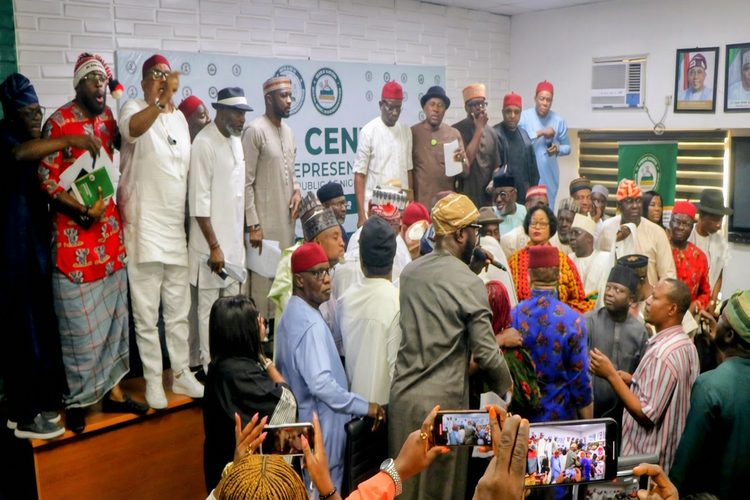

The Deputy spokesperson of the House of Representatives, Philip Agbese, has described Tuesday’s walkout by some opposition lawmakers during deliberations on the Electoral Amendment Bill as a reflection of democracy in action and standard parliamentary practice across the world.
Recall that members of the minority caucus had staged a walkout during plenary to protest the House’s position on Clauses 60, 3, and 84 of the Electoral Amendment Bill 2026.
The protest followed the rejection of an amendment moved by Peoples Democratic Party lawmaker, Bamidele Salam, who proposed that the House retain the provision mandating compulsory electronic transmission of election results to the IReV portal directly from polling units, while removing the proviso that allows manual transmission in the event of technological failure.
Speaking in an interview in Abuja on Thursday, Agbese maintained that such actions are not unusual in parliamentary systems, just as he cautioned against interpreting the protest as a breakdown of legislative order, stressing that dissent remains an integral part of democratic engagement.
The Deputy spokesperson stressed that the House remains united in its commitment to Nigeria’s democracy and the interests of citizens, despite differences of opinion among members.
“Walkouts are part of standard parliamentary practice globally. They are used by lawmakers to express firm opposition to decisions they do not align with,” he said.
“What is important is that issues are ventilated openly and resolved through legislative procedures. Nigerians should be assured that the House will not fail them,” he said.
On the decision reached regarding Section 60 (3), Agbese clarified that the House had approved mandatory electronic transmission of Form EC8A election results to the IReV portal to ensure that valid votes are fully and accurately captured.
He noted, however, that lawmakers also introduced safeguards to address situations where electronic transmission may not be feasible, allowing for manual transmission under such circumstances.
He added that the House leadership is consulting widely with stakeholders to ensure that contentious issues, particularly those concerning electoral reforms, are addressed transparently and in accordance with constitutional provisions.