In her address, Kekere-Ekun said while constructive criticism remained legitimate in a democracy, blanket denunciations of the institution were neither fair nor responsible.
18th February 2026 02:03 PM 
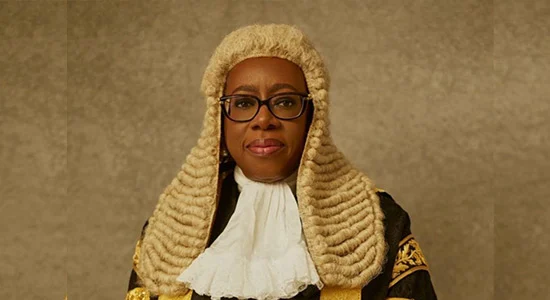

The Chief Justice of Nigeria, Kudirat Kekere-Ekun, on Wednesday decried what she described as broad, sweeping attacks on the Judiciary.
Kekere-Ekun warned that indiscriminate allegations of corruption against judges could erode public trust and imperil the rule of law.
She gave the warning at the swearing-in ceremony of newly appointed judges of the Federal High Court at the Supreme Court Complex, in Abuja.
Recall that the National Judicial Council recommended 14 candidates to President Bola Ahmed Tinubu for appointment as judges of the Federal High Court after its 110th meeting held on January 13 and 14, 2026, presided over by the CJN.
Although the recommendation was initially delayed pending security clearance, just as the council later forwarded the names on January 22 after receiving security reports with no adverse findings.
In her address, Kekere-Ekun said while constructive criticism remained legitimate in a democracy, blanket denunciations of the institution were neither fair nor responsible.
“It has become fashionable in some quarters to deploy blanket allegations of corruption against the institution as a whole.
“While constructive criticism is legitimate in a constitutional democracy, indiscriminate denunciation is neither fair nor responsible. Such sweeping generalisations wound deeply.
“They do not merely criticise decisions; they cast aspersions on the integrity of men and women who have lived honourably, laboured faithfully, and discharged their duties with unblemished records,” she said.
Kekere-Ekun stressed that allegations of corruption must be specific and evidence-based, warning that reckless rhetoric damages not just individual reputations but the entire justice system.
“When corruption is alleged without specificity, without evidence, and without recourse to established complaint mechanisms, the damage is collective. It erodes public trust, weakens institutional authority, and unjustly stains reputations built over decades of sacrifice.
“A judge who has served with integrity should not be made to stand under a cloud created by reckless rhetoric,” she stated.
The CJN, however, maintained that the Judiciary does not claim infallibility, noting that “where misconduct is established, it will be addressed firmly and transparently. The National Judicial Council remains vigilant and will not hesitate to discipline any Judicial officer found wanting.”
She cautioned that judicial independence must be protected from “careless assault,” adding that once confidence in the courts collapses, the rule of law itself is endangered.